Understanding Printing Paper and Why It Matters
When we think about printing, most of us focus on the printer and the design. Yet the type of printing paper we choose can completely change the final result. From school projects to business reports and photo prints, paper is not just a surface. It shapes how colours appear, how text looks, and even how long the print lasts.
At A2B Office Supplies, we often see people pick paper without much thought, then wonder why their prints look dull or smudged. The truth is simple. Different printing jobs need different types of paper. Once we match the paper to the task, the results improve straight away.
There is a wide range of specialist options available, each created with a clear purpose. Some are designed for sharp text, others for glossy images, and some even for outdoor use. Understanding these choices helps avoid waste while getting better results from every print.
Choosing the Right Printing Paper for Every Task
Not all paper behaves the same way when it meets ink or toner. This is why choosing the right printing paper matters so much. Thinner paper may be fine for everyday documents, but it can bleed or curl when used for photos. Heavier paper, on the other hand, holds ink better and feels more professional.
A good starting point is to think about what you are printing. A school worksheet needs something different from a marketing flyer or a family photo. Once we know the purpose, we can choose paper with the right weight, finish, and texture.
Printer compatibility is another key factor. Inkjet printers work best with coated papers that absorb liquid ink properly. Laser printers use heat and toner, so they need paper that can handle higher temperatures. Using the wrong type can lead to poor results or even damage the printer.
We also encourage trying a range of options from the wider selection of printing paper available at A2B Office Supplies. Testing a few types can quickly show what works best for your needs.
Exploring Specialist Printing Materials for Better Results
When a standard sheet will not do, specialist printing materials come into play. These papers are designed with specific finishes and coatings that support different printing goals. Whether it is a glossy photo, a textured art print, or a waterproof sign, there is a paper made for that exact task.
Specialist printing materials help bring out the best in ink quality. Colours appear richer, lines look sharper, and the overall finish feels more complete. This is especially useful for business use, where presentation matters, or for creative projects where detail is key.
We often recommend experimenting with a few options. The difference can be surprising. A simple switch from plain paper to a coated or heavyweight option can make colours pop and text stand out in a way that is easy to notice.
Epson Inkjet Paper and Its Everyday Benefits
Among the most trusted choices for inkjet printing is Epson Inkjet Paper. It is made to work smoothly with inkjet printers and gives clean, sharp results. The surface coating helps control how ink spreads, which keeps images clear and prevents smudging.
A great example is the Epson white photo inkjet A4 paper. This option is perfect for everyday photo prints and light graphic work. It offers a balance between quality and cost, making it suitable for home or office use.
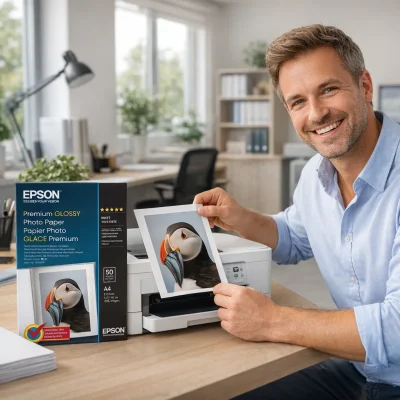
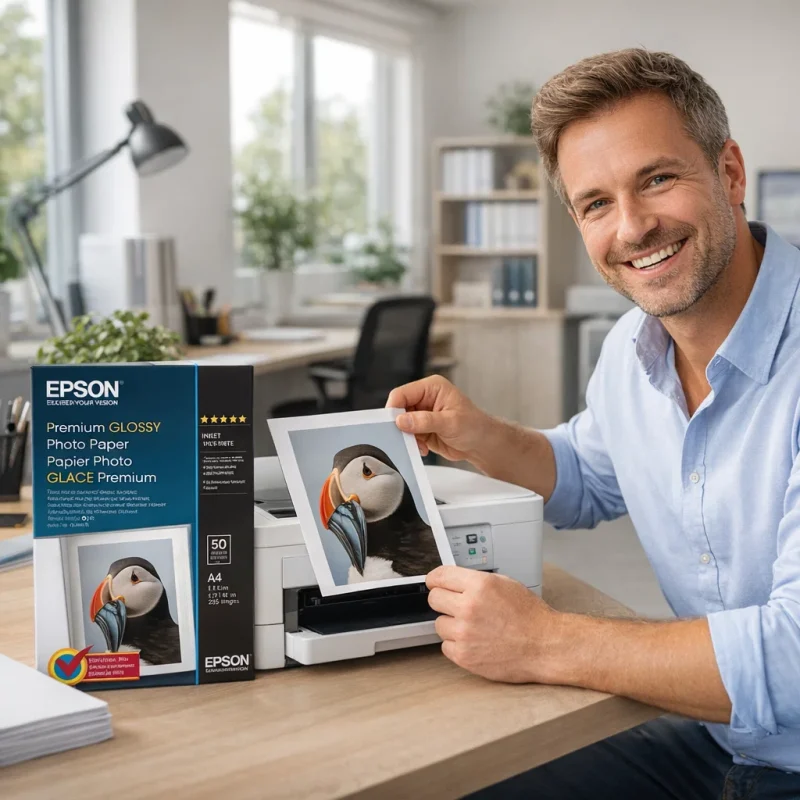
For those who print more detailed images or need a richer finish, glossy options stand out. The Epson premium glossy A4 paper delivers deeper colour tones and a shine that makes photos look more lifelike. If you prefer smaller prints, the Epson Premium Glossy Photo Paper 100 x 150 mm is ideal for snapshots and albums.
Even more specialised choices are available. The Epson self-adhesive photo paper allows you to create stickers or labels with photo-quality results. Meanwhile, the Epson matte heavyweight paper gives a smooth, non-glossy finish that works well for presentations and reports.
For larger prints, the Epson A3 premium glossy photo paper provides a strong base and a polished look that suits posters and high-impact visuals.
Other Specialist Printing Materials Worth Trying
While Epson Inkjet Paper is a strong choice, many other specialist printing materials suit different needs. Glossy photo paper is one of the most popular options for printing images. Its shiny finish reflects light and makes colours appear brighter.
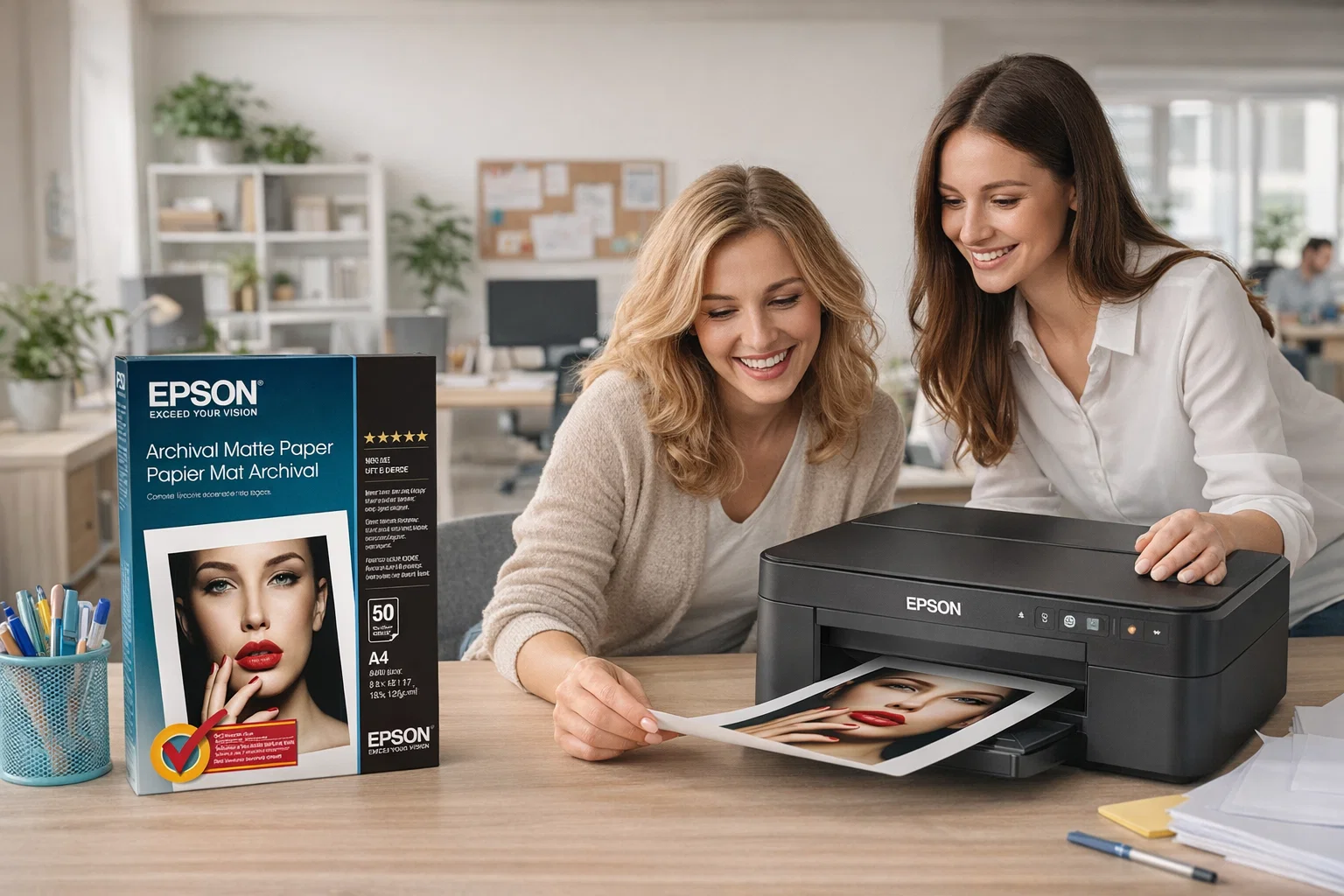
Matte paper offers a different feel. It has no shine, which reduces glare and makes it easier to read text. This is a favourite for reports, booklets, and artwork where detail matters more than gloss.
Textured paper is often used for creative work. It can mimic surfaces like canvas or watercolour paper, giving prints an artistic touch. This type of paper works well for invitations, greeting cards, or prints that aim to stand out.
There are also durable papers designed for outdoor use. These can resist water and fading, making them suitable for signage or labels exposed to the elements. Choosing the right one depends on how and where the print will be used.
Real World Uses That Show the Difference
We often see how the right paper changes the outcome of a project. A small business printing product photos can move from dull images to sharp, eye-catching prints just by switching to glossy photo paper. This improves how customers see their brand without changing the printer or design.
Students also benefit from better paper choices. Using a heavier matte sheet for a report makes it feel more professional and easier to read. Teachers often notice the quality difference straight away.
At home, family photo printing becomes more enjoyable with the right paper. Colours look closer to what we see on screen, and prints last longer without fading or smudging. Even simple things like stickers or labels become more fun when using adhesive photo paper.
Practical Tips for Getting the Best from Printing Paper
Choosing the right printing paper does not need to be complicated. Start by thinking about what you want the final print to look like. If you want bright colours and shine, go for glossy. If you prefer a softer look, matte might be better.
Check the weight of the paper as well. Heavier paper feels stronger and often gives better results for images or presentations. Lighter paper is fine for everyday printing, but may not handle heavy ink well.
Always match the paper to your printer type. Inkjet and laser printers need different paper, and using the correct one helps avoid problems.
Trying samples is a smart approach. Testing a few types helps you see what works best before choosing a larger pack.
FAQs
What is the best printing paper for photos
Glossy photo paper is often the top choice for photos because it makes colours brighter and adds a polished finish.
Can I use any paper in an inkjet printer?
Not all paper is suitable. Inkjet printers work best with coated paper that absorbs ink properly and prevents smudging.
What is the difference between matte and glossy paper
Matte paper has no shine and reduces glare, while glossy paper reflects light and makes colours stand out more.
Is heavier paper always better?
Not always. Heavier paper is great for photos and presentations, but lighter paper works well for everyday documents.
Where can I find quality paper options?
A2B Office Supplies offers a wide range of options, including everyday sheets and specialist choices for different printing needs.
We recommend trying different options to see what suits your style and needs. A small change in paper can lead to a noticeable improvement in quality. Explore the range at A2B Office Supplies and find the paper that works best for your next project.