
Every small business relies on a handful of everyday items to keep things running smoothly, and getting these right can save time, money and a fair bit of stress. Whether you are setting up a new office or simply topping up your cupboard, understanding office stationery basics helps you spend wisely and work more smoothly day to day.
Why office stationery essentials for small business matter
It might seem like a small thing, but the stationery cupboard has a bigger impact on your business than most people realise. Running out of paper on the day of a big meeting, or discovering that your printer ink has dried up right before an invoice needs sending, can cause real delays. Getting your office supplies sorted properly means your team spends less time hunting for basics and more time actually getting on with their work.
Small businesses often have tighter budgets than larger companies, so every pound spent on stationery needs to count. This means thinking carefully about what you actually need, buying in sensible quantities, and choosing suppliers who understand the pressures that smaller teams face. A good starting point is browsing a full range of office supplies designed with everyday business needs in mind.
Core office stationery basics you cannot do without
There are a handful of items that appear in almost every office, no matter the size or industry. Getting these basics right is the foundation of a well-run workplace.
Paper is the obvious starting point. Plain paper is used for everything from printing letters to jotting down notes, and having a reliable stock on hand avoids last minute panic. Many businesses find it useful to buy plain paper in bulk so they never run short during busy periods. Beyond the standard sheets, though, most offices also need a wider selection of card and speciality paper for different jobs, such as printing certificates, flyers or presentation materials. A broader look at paper and card options can help you work out exactly what your team needs for different tasks.
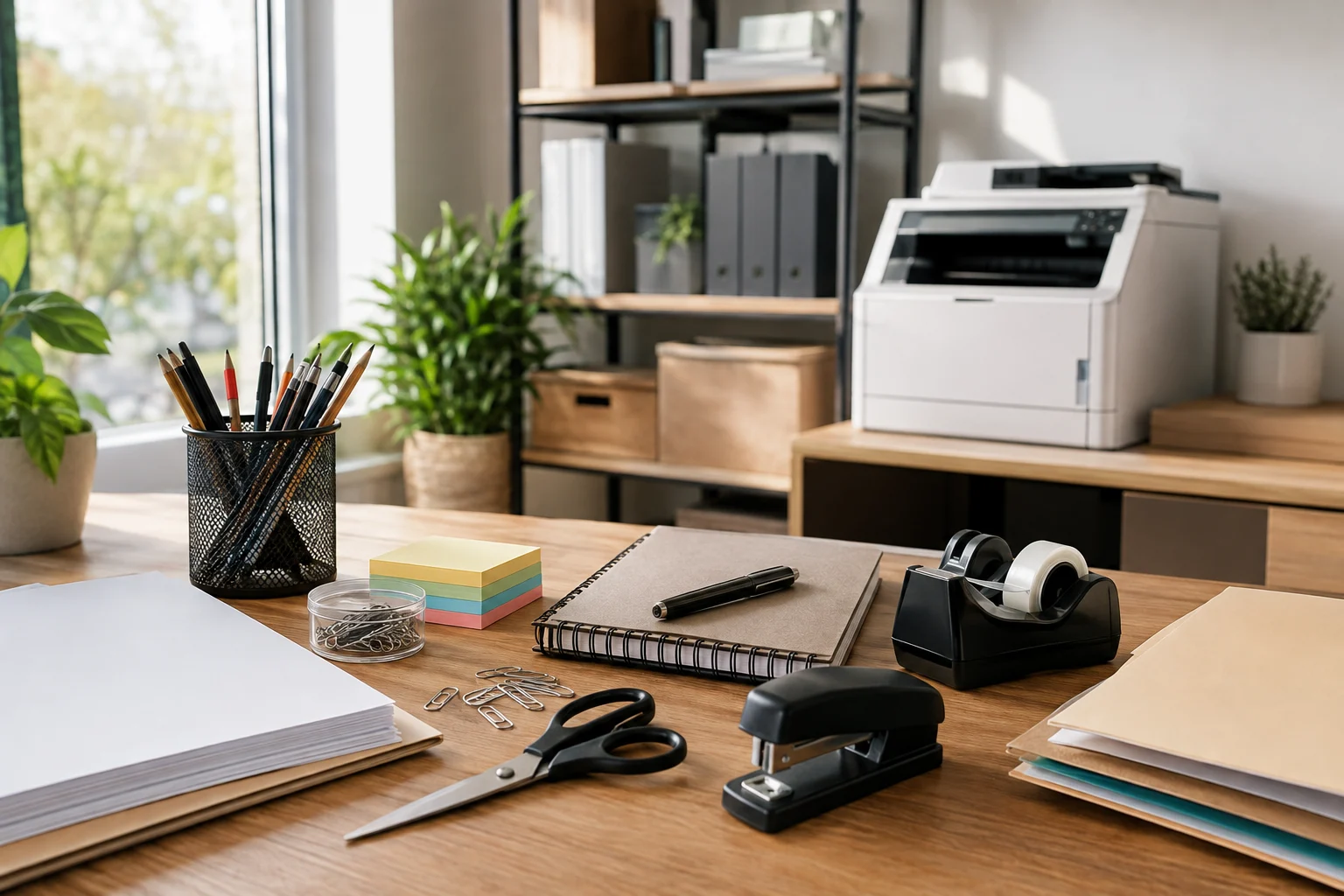
Writing tools are another must-have. Pens, pencils, highlighters and markers are used constantly, and it is worth keeping a decent supply so nobody is left hunting through drawers for something that actually works. Sticky notes, paper clips and staplers round out the basics that every desk should have close by.
Filing and organisation supplies
Once the paper starts piling up, you need somewhere to put it. Filing basics such as ring binders, lever arch files, dividers and labels keep documents easy to find, which matters a great deal when you are trying to locate an invoice or contract quickly. Poor organisation costs more time than most business owners realise, and a simple filing system can prevent a lot of frustration.
Some businesses still rely on older methods of record keeping alongside digital systems. If you deal with duplicate forms or receipts, it is worth keeping a stock of carbon paper so you always have a backup copy without needing to print twice. It is a small thing, but it can save a surprising amount of admin time.
Desk essentials and printing supplies
Beyond paper and filing, there are the smaller desk items that quietly keep an office ticking over. Staplers, tape, scissors, rulers and desk tidies all fall into this category. None of these items is exciting, but a missing stapler or an empty tape dispenser can hold up work far more than people expect.
Printing supplies deserve special mention too. Ink and toner cartridges, printer paper and specialist materials for particular jobs all need to be kept topped up. If your business regularly produces signs, posters or presentation materials, it is worth looking into specialist papers designed for these purposes, since standard printer paper is not always suitable for heavier or more decorative jobs.
Buying office stationery basics without overspending
One of the biggest challenges for small businesses is working out how much stationery to buy and when. Buy too little, and you risk running out at an awkward moment. Buy too much, and you tie up money in stock that sits unused for months. Finding the right balance takes a bit of planning, but it pays off quickly.
A sensible approach is to track what your team actually uses over a month or two, rather than guessing. This gives you a realistic picture of your regular needs, so you can order in quantities that make sense rather than buying on impulse. Many businesses also find it useful to set a simple reorder point, such as restocking paper or ink once supplies drop below a certain level, so nothing runs out unexpectedly.
There is also a lot to be said for buying from a supplier who understands the pressures small businesses face. Larger retailers are not always geared towards smaller orders or quick turnarounds, which can leave you waiting longer than you would like. Our piece on winning the battle over buying office stationery looks at common pitfalls businesses fall into when sourcing supplies and how to avoid them.
It is also worth thinking about hidden costs. Cheaper products are not always cheaper in the long run if they wear out quickly or do not perform as expected. We explored this in more detail in our article on what you might not know about office stationery costs, which is well worth a read if you want to avoid nasty surprises on your budget.
Making the most of laminating and finishing supplies
Laminating is one of those tasks that seems simple but often goes wrong if you do not know a few basic tricks. Whether you are protecting signs, menus, instructions, or important documents, achieving a clean finish makes a real difference in how professional your materials look. Our guide with effective tips for lamination covers practical advice, from choosing the right pouch size to avoiding bubbles and curling.
Lamination is particularly useful for small businesses that need durable signage or reference materials that will be handled often. Menus, price lists, safety notices and instruction sheets all benefit from being laminated, since it protects them from spills, tears and general wear. Getting this right saves you from reprinting the same document over and over.
Finishing touches like this often get overlooked when people think about stationery, but they can make a noticeable difference to how your business presents itself to customers and staff alike.
FAQs
What stationery items should every small business keep in stock
At a minimum, most small businesses need plain paper, pens and pencils, sticky notes, staplers, filing folders and printer supplies. Beyond that, your exact needs will depend on your industry, but these basics cover the vast majority of daily tasks.
How can a small business save money on office stationery
Tracking actual usage over a month or two, buying in sensible bulk quantities rather than one item at a time, and choosing a supplier that understands smaller order sizes can all help keep costs down. It is also worth checking that cheaper products are not costing you more in the long run through poor performance or frequent replacement.
Why is filing and organisation important for small offices
Good filing saves time. When documents are easy to find, staff spend less time searching and more time working. It also reduces the risk of losing important paperwork, which can cause real problems if a client or supplier needs something urgently.
Is laminating worth it for a small business
Yes, particularly for items that get handled often or need to last, such as signage, menus and instruction sheets. Laminating protects paper from spills, tears and general wear, which saves you from reprinting the same materials again and again.
Getting your office stationery basics sorted for good
Sorting out your stationery cupboard does not need to be complicated. Focus on the core basics such as paper, pens, filing supplies and printing materials, keep an eye on what your team actually uses, and choose a supplier who understands the needs of smaller businesses. Getting these small details right makes a genuine difference to how smoothly your office runs day to day.
If you are ready to sort out your supplies properly, take a look at the full range available from A2B Office Supplies and see how easy it can be to keep your office stocked with everything it needs.













 Google
  Facebook
  Trustindex
  Ebay
Ebay