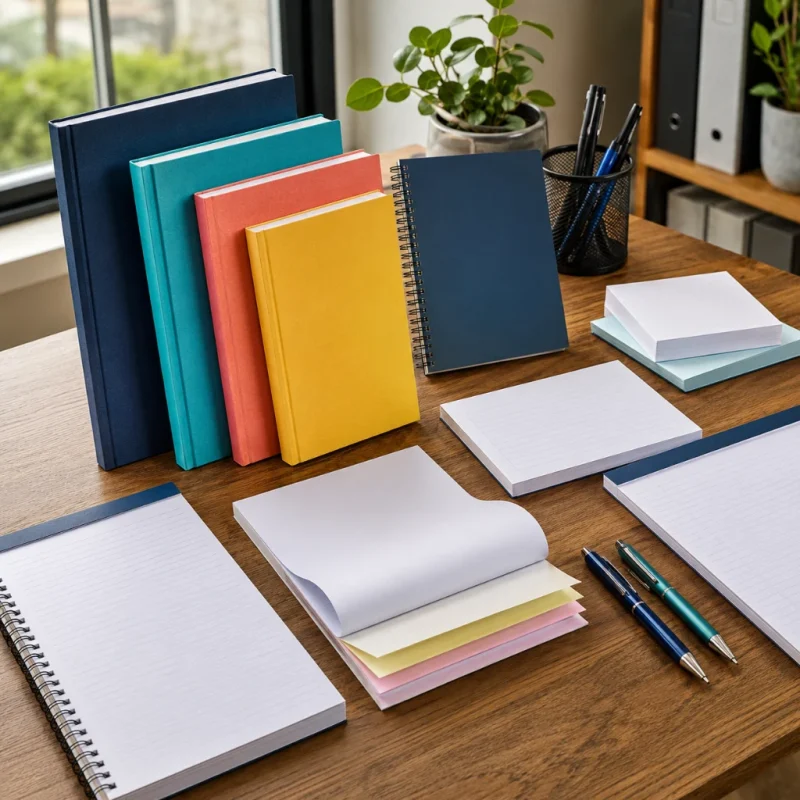
Picking the right stationery might seem like a small decision, but it makes a huge difference to how well you work each day. Whether you’re jotting down meeting notes, filling in forms, or sketching out ideas, the tools you use shape how smoothly your day runs. Good stationery choices help you stay organised, save time, and avoid the frustration of tools that simply don’t do the job.
At A2B Office Supplies, we know that picking the right notebooks, pads, and forms isn’t just about grabbing whatever’s on the shelf. It’s about matching the product to the task at hand. Get this right, and you’ll notice a real change in how organised and focused your workday feels.
Why Choosing the Right Stationery Matters
Think about the last time you used a notebook that fell apart after a week, or a pen that bled through the page and ruined your notes. Small annoyances like these add up over time. They slow you down, cause mistakes, and can even make you look less professional in front of clients or colleagues.
Choosing quality stationery isn’t about spending more money for the sake of it. It’s about understanding what you need and finding products built for that specific purpose. Our guide on what you don’t know about office stationery items could be costing you more than you think explains this well. Cutting corners on basic supplies often costs more in the long run through wasted time, damaged materials, and lost productivity.
Factors to Consider in Choosing Work Notebooks
Notebooks are probably the most personal piece of stationery you’ll use at work. Everyone has their own style, and what works for one person might feel completely wrong for another. Here’s what to think about before you buy your next batch.
Purpose and Usage
Before choosing a notebook, ask yourself what you’ll actually use it for. Are you taking notes during meetings? Planning your day? Sketching out project ideas? Each of these tasks calls for something slightly different.
A meeting notebook needs to be quick to write in and easy to flip through later when you’re searching for that one important point someone made. A daily planner needs clear sections for time slots, tasks, and priorities. If you’re using your notebook for creative work, you might want blank pages rather than lined ones, giving you room to draw diagrams or mind maps.
Think about how often you’ll refer back to what you’ve written. If you need to find information quickly, a notebook with an index or numbered pages saves a lot of hassle.
Size and Portability
Size matters more than people realise. A large notebook feels great sitting on your desk, but it’s not much use if you’re constantly moving between meetings or working from different locations. Smaller notebooks slip into a bag easily and don’t weigh you down.
On the other hand, if you’re doing detailed planning or need space to write a lot, a bigger notebook gives you room to spread out your thoughts. Consider your daily routine. Do you sit at one desk all day, or are you moving around the office and beyond? Your answer will point you towards the right size.
Paper Quality
This is where many people go wrong. They focus on the cover design or the price and forget about what actually matters, the paper itself. Poor quality paper causes ink to bleed through, making both sides of the page hard to read. It can also feel unpleasant to write on, which slows you down and makes note-taking a chore rather than a quick task.
Good paper should feel smooth under your pen, resist bleed-through, and hold up over time without yellowing or becoming brittle. If you’re using specific pens or markers, checking the paper’s compatibility beforehand saves you from ruined pages later. Our range of specialist papers covers everything from smooth writing stock to heavier options built for durability.
Selection of Writing Pads for Specific Tasks
Writing pads serve a different purpose to notebooks. They’re often used for quick, temporary notes rather than long-term records, but that doesn’t mean quality doesn’t matter.
Functionality
Pads are brilliant for jotting things down fast. Maybe you need to write a quick reminder, take a phone message, or rough out an idea before it disappears from your mind. The best pads are the ones that let you write without thinking too hard about the process.
For rough sketches or brainstorming, plain pads work best since they don’t restrict your thinking with lines or boxes. Our plain paper range gives you that open space to think freely, whether you’re planning a project or working through a problem.
Design and Layout
The layout of a pad should match what you’re using it for. Lined pads suit written notes and lists, since the lines keep your writing straight and easy to read back. Grid pads work well for anything involving numbers, diagrams, or technical drawings, giving you a structure to work within.
If your work involves a mix of writing and drawing, look for pads with dotted grids. These offer a light structure without being as restrictive as solid lines, giving you flexibility depending on the task.
Durability and Binding
How a pad is bound affects how long it lasts and how easy it is to use. Spiral-bound pads let you flip pages back fully without the pad closing on itself, which is handy if you’re referring back to previous notes while writing. They also tend to lie flatter on a desk, making writing more comfortable.
Glued pads, where pages are stuck together at the top, are simple and often cheaper, but pages can tear off more easily during heavy use. Think about how roughly you’ll handle the pad day to day. If it’s going in and out of a bag constantly, a sturdier binding will last longer.
Importance of Work Forms
Forms don’t get the same attention as notebooks or pads, but they play a massive role in keeping a business running smoothly. From order forms to timesheets, forms provide structure to processes that would otherwise be messy and inconsistent.
Customisation and Relevance
Not every business needs the same forms, so it’s worth thinking about what your specific processes require. A generic form might cover the basics, but a customised one, tailored to your exact workflow, saves time and reduces confusion. Everyone knows exactly what information goes where, which cuts down on mistakes and back-and-forth questions.
If you’re regularly filling in the same type of document, whether that’s a delivery note, invoice, or internal request form, having a clear and consistent layout helps everyone involved understand it at a glance. This is especially true when new staff join and need to get up to speed quickly.
Efficiency and Organisation
Well-designed forms make a real difference to how smoothly a business runs. When a form is laid out logically, with clear sections and enough space to write, people fill it in correctly the first time. This means fewer errors, less time spent chasing missing information, and a smoother process from start to finish.
Poorly designed forms, on the other hand, lead to confusion. People skip sections, write in the wrong place, or leave out details because the form wasn’t clear about what was needed. Taking the time to get your forms right pays off across the whole business. Our piece on office supplies for productive workplaces looks at this in more depth, showing how the right materials support better daily operations.
If you’re working with carbon copies for forms that need duplicating, such as receipts or order confirmations, our carbon paper range makes sure you keep a clear copy without needing a printer or scanner involved.
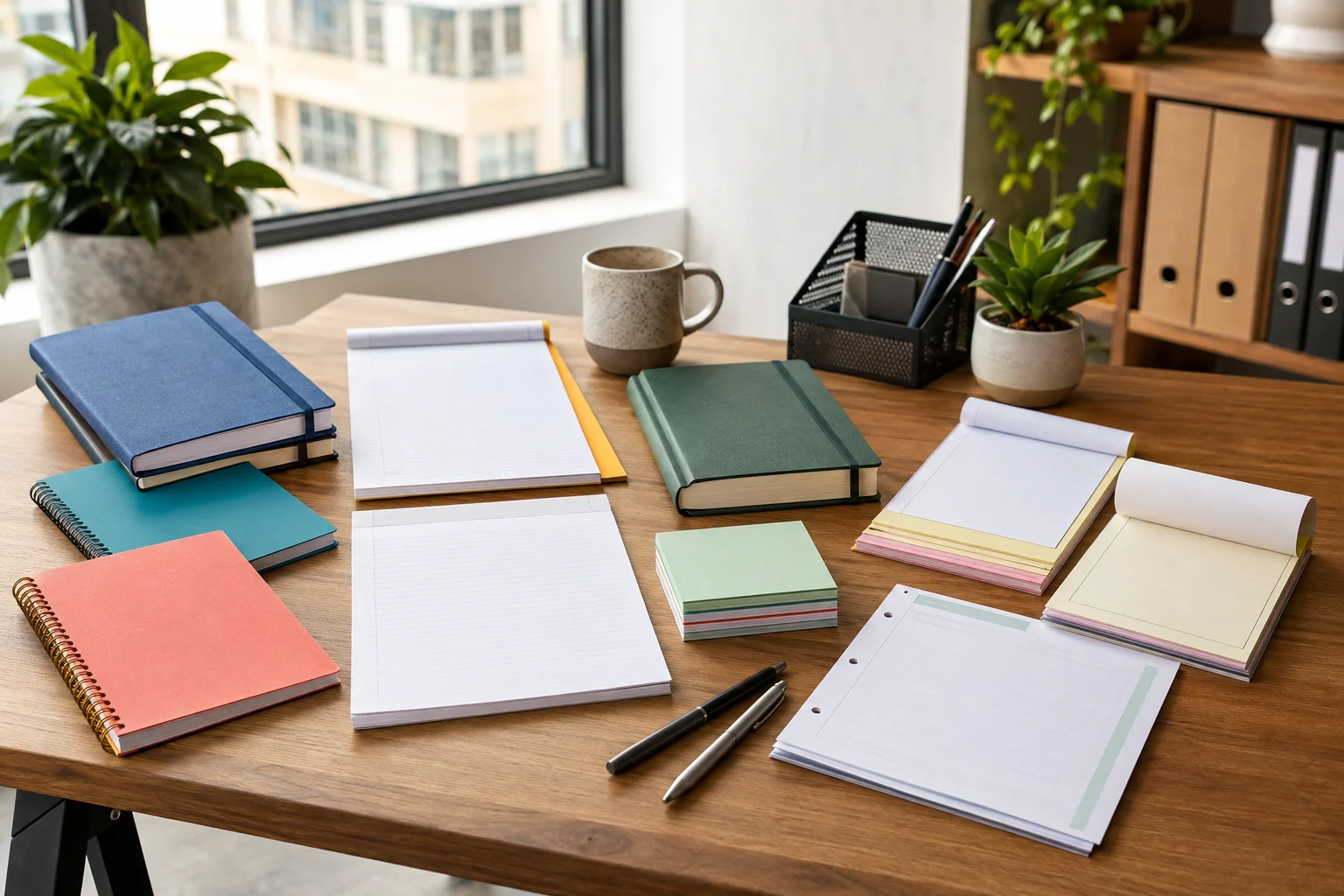
Integration of Digital and Traditional Methods
Paper-based tools aren’t going anywhere, but that doesn’t mean digital tools don’t have their place too. Many people find the best approach combines both, using physical notebooks and pads for quick notes and creative thinking, while digital apps handle scheduling, reminders, and information that needs to be shared with others.
Writing by hand has been shown to help with memory and understanding, which is why many people still prefer a physical notebook for meetings or planning sessions, even when everything else happens on a screen. At the same time, digital calendars sync across devices and send reminders, something paper simply can’t do.
The trick is finding a balance that works for you. Maybe you jot down initial ideas on paper, then transfer the final version into a digital document for sharing with your team. Or perhaps you keep a physical planner for daily tasks while using digital tools for long-term project tracking. There’s no single right answer, just what fits your working style best.
Stationery and Office Supplies on a Budget
Cost is always a factor when buying stationery and office supplies, especially if you’re ordering in bulk for a whole team. It’s tempting to go for the cheapest option available, but this often means sacrificing quality, which can cost more in the long run through replacements and wasted materials.
A better approach is to think about value rather than just price. Spending a little more on notebooks with better paper, or forms designed properly for your business, often means less waste and fewer headaches down the line. Our article on the battle over buying office stationery and how to win it covers some practical tips for getting the balance right between cost and quality.
It’s also worth checking whether buying in bulk brings the price down, particularly for items you use regularly, such as plain paper, forms, or pads. Our paper and card range includes options at different price points, so you can find something that suits your budget without compromising on what you need.
Thinking About the Environment
More businesses are paying attention to the environmental impact of their stationery choices, and it’s worth considering too. Recycled paper options, sustainably sourced products, and materials that break down naturally are all becoming easier to find.
If you’re printing large volumes or need paper for rough drafts, options like our newsprint paper or sugar paper bumper stack offer practical, cost-effective choices that also reduce waste when used for temporary or draft purposes. Making small swaps like this across your business adds up over time, both for your budget and for reducing unnecessary waste.
Picking the right notebooks, pads, and forms isn’t complicated once you know what to look for. Think about how you’ll use each item, choose quality that matches the task, and don’t be afraid to customise where it makes sense. Small choices like these add up to a workday that runs more smoothly, with less time wasted on tools that don’t do their job properly.
At A2B Office Supplies, we’ve put together a full range covering everything mentioned here, from specialist papers and forms to everyday notebooks and pads, all designed to make your working life easier. Take a look through our range and find the stationery that fits how you actually work, not just what happens to be on the shelf.
If you’re ready to sort out your stationery and office supplies properly, get in touch with our team today and let us help you find exactly what your business needs.












 Google
  Facebook
  Trustindex
  Ebay
Ebay