Understanding the Role of Recycling bins in Everyday Life
Recycling has become a normal part of daily life, yet many of us still underestimate how much difference simple habits can make. One of the easiest ways to take control of waste is through the use of Recycling bins. These bins help us sort materials quickly and reduce the amount of rubbish that ends up in landfill.
Across homes, schools, and workplaces, we are producing more waste than ever before. Food packaging, paper, plastics, and electronic waste can build up fast. Without a proper system in place, much of this waste is thrown away without a second thought. That is where Recycling bins step in as a simple solution that anyone can adopt.
At A2B Office Supplies, we see how small changes, such as adding labelled bins, can make a big difference. When waste is sorted properly at the source, it becomes much easier to recycle and reuse materials.
Growing Waste Challenges and the Need for Change
Waste management has become a serious issue around the world. As populations grow and consumption increases, bins overflow faster, and landfill sites continue to expand. This not only takes up space but also harms wildlife and pollutes soil and water.
When waste is not sorted, recyclable materials are often lost. Paper gets mixed with food waste, plastics become contaminated, and glass is thrown away instead of being reused. This creates extra work and cost for waste processing facilities.
In offices, the problem can be even more noticeable. Large amounts of paper, packaging, and food waste are generated every day. Without clear systems, staff may not know where to dispose of items properly.
By introducing clearly labelled Recycling bins, we can reduce confusion and encourage better habits. Simple steps like separating paper from general waste can lead to better recycling rates and cleaner environments.
Recycling bins as a Simple and Effective Solution
Recycling bins make waste sorting straightforward. When bins are placed in visible and accessible areas, people are far more likely to use them correctly. This helps reduce contamination and makes recycling more successful.
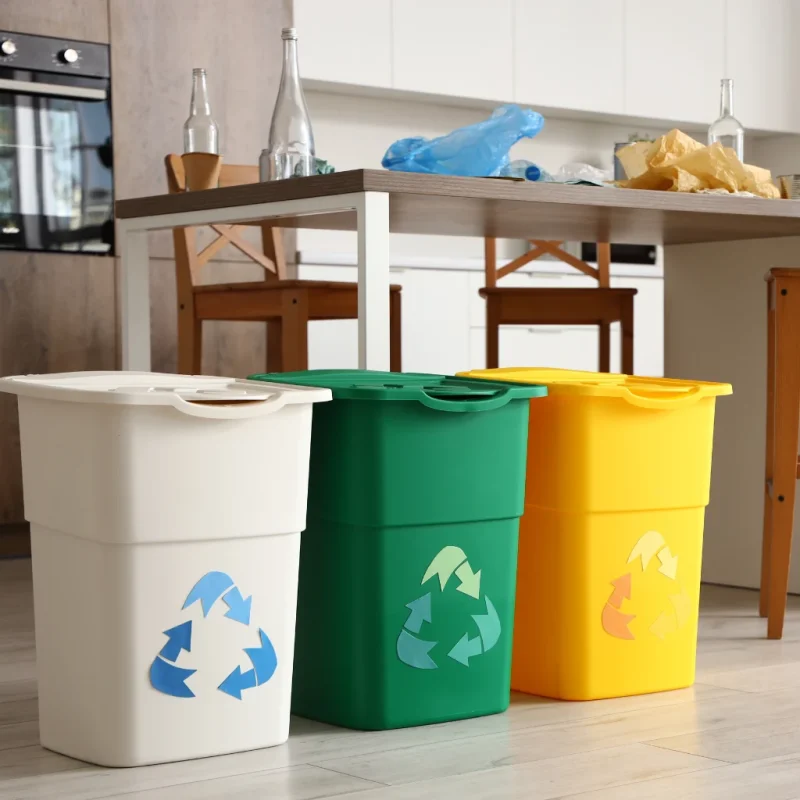
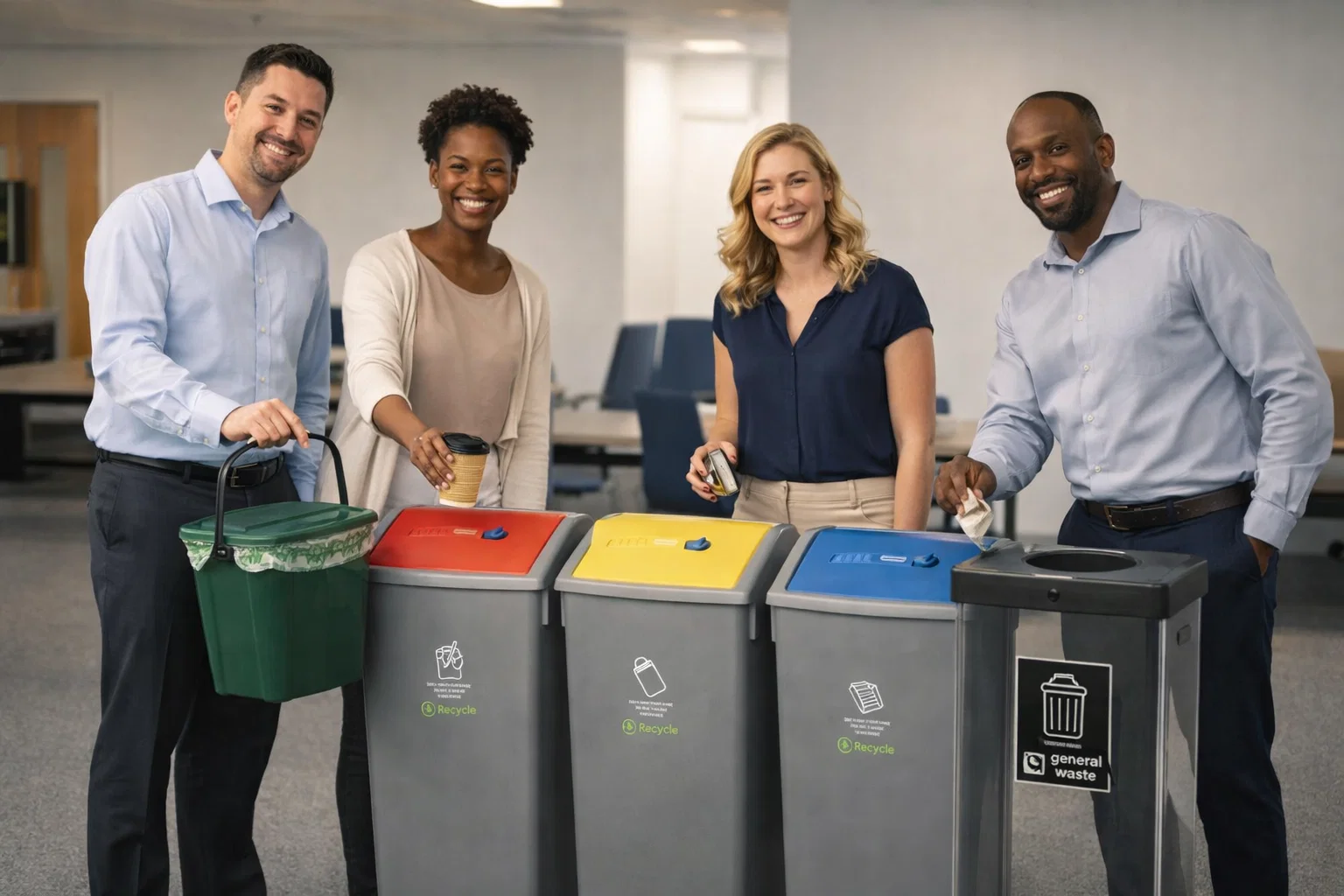
A well-planned system usually includes separate bins for paper, plastics, glass, food waste, and general rubbish. Colour coding and clear labels are key. For example, green bins are often used for recycling, while red or black bins may be used for general waste.
Products such as the Recycling bins range offer options for different environments, from compact office units to larger outdoor bins. Selecting the right bin for the right space makes it easier for everyone to take part.
Small offices may benefit from compact sets like the 2Work green recycling bin pack of 3, which allows teams to separate waste without taking up too much room.
Types of Recycling bins for Different Spaces
Not all Recycling bins are the same. Different environments require different styles and sizes to work well.
In kitchens and break rooms, food waste is a major concern. A practical option, such as the 7L kitchen waste caddy with lid helps keep organic waste contained and reduces unpleasant smells.
For handling specialised waste, such as batteries, a dedicated bin is essential. The battery tube bin 20L provides a safe place to collect used batteries, preventing harmful materials from entering general waste.
Larger shared spaces often need bigger solutions. Products like the Addis grey 54 litre recycling bin kit or the Addis recycling bin kit pack of 3 offer multi-compartment systems that work well in busy offices or schools.
Outdoor and industrial areas benefit from durable options such as the static bin 50L recycled polyethene blue, which can handle heavier use.
Cardboard recycling is also easier with larger units like the Acorn green cardboard recycling bin 60 litre or the Acorn green big recycling bin 160 litre, which are ideal for collecting bulky materials.
Even smaller targeted bins, such as the push spring lid bin 12L can be used for specific waste streams, helping maintain tidy spaces.
Environmental and Cost Benefits of Using Recycling bins
Recycling bins do more than keep spaces tidy. They help reduce landfill waste and lower pollution levels. When materials are recycled, fewer raw resources are needed, which protects forests, reduces mining, and saves energy.
Businesses can also see financial benefits. Waste disposal costs can decrease when less general waste is produced. Recycling services may be more affordable than landfill disposal, especially when waste is sorted correctly.
There is also a positive impact on reputation. Companies that take recycling seriously are viewed as responsible and aware of environmental issues. This can influence how customers and clients perceive the business.
At A2B Office Supplies, we often see organisations improve both their environmental impact and their internal processes simply by upgrading their bin systems.
Encouraging Better waste segregation in Workplaces
Building Good Habits Through waste segregation
Waste segregation is the process of separating different types of waste so they can be handled properly. Without it, even the best recycling systems can fail.
Clear signage is one of the easiest ways to improve waste segregation. Labels should show exactly what can and cannot go into each bin. Pictures can help, especially in busy environments where people may not read detailed instructions.
Training also plays a part. Staff should understand why recycling matters and how to do it correctly. Short reminders or posters can keep the message fresh.
Overcoming Common Challenges in waste segregation
One challenge is contamination. When the wrong items are placed in a recycling bin, it can affect the entire batch. This often happens when bins are not clearly marked or when people are unsure about what goes where.
Another issue is convenience. If recycling bins are harder to access than general waste bins, people may choose the easier option. Placing bins side by side can solve this problem.
Cost can be a concern at the start, but it often balances out over time through reduced waste disposal fees and better recycling outcomes.
Best Placement and Setup for Recycling bins
Where you place Recycling bins can make a big difference. Bins should be easy to find and close to where waste is produced. In offices, this means near desks, printers, and kitchen areas.
In public spaces, bins should be placed along walkways and entrances where people naturally pass. The easier it is to use a bin, the more likely people will use it correctly.
Grouping bins together is another effective method. When recycling and general waste bins are placed side by side, people can quickly choose the right option.
Consistency matters too. Keeping the same colours and labels across a building helps avoid confusion.
Education and Awareness Make the Difference
Even with the best bins in place, people need to understand how to use them. Simple education efforts can lead to lasting changes.
Schools can teach children about recycling from an early age, helping them build habits that last into adulthood. Offices can share quick guides or run short awareness sessions.
Visual reminders such as posters and bin labels keep recycling at the top of mind. When people understand the impact of their actions, they are more likely to take part.
Real World Examples of Recycling Success
Many organisations have seen clear improvements after introducing better recycling systems. Offices that once produced large amounts of mixed waste have reduced landfill contributions by using labelled bins.
Schools have also made progress by placing recycling stations in classrooms and common areas. Students quickly learn how to separate waste when the system is simple and visible.
Retail and hospitality businesses have found that customers are more likely to recycle when bins are easy to use. Clear signs and convenient placement lead to better results.
These examples show that small changes can have a strong impact over time.
Recycling bins offer a straightforward way for all of us to manage waste more responsibly. By sorting materials at the source, we reduce landfill use, protect natural resources, and create cleaner spaces for everyone.
From compact office sets to larger outdoor solutions, there are options to suit every environment. When combined with clear labelling and simple education, these bins can change habits and improve recycling results.
At A2B Office Supplies, we encourage you to take a closer look at your current setup and consider how Recycling bins can improve it. Even small adjustments can lead to lasting benefits for your workspace and the wider environment.












 Google
  Facebook
  Trustindex
  Ebay
Ebay